United We Soar: Reflections from the 2025 NAEHCY Conference
By Elizabeth Walsh, Assistant Director of Early Education Inclusion
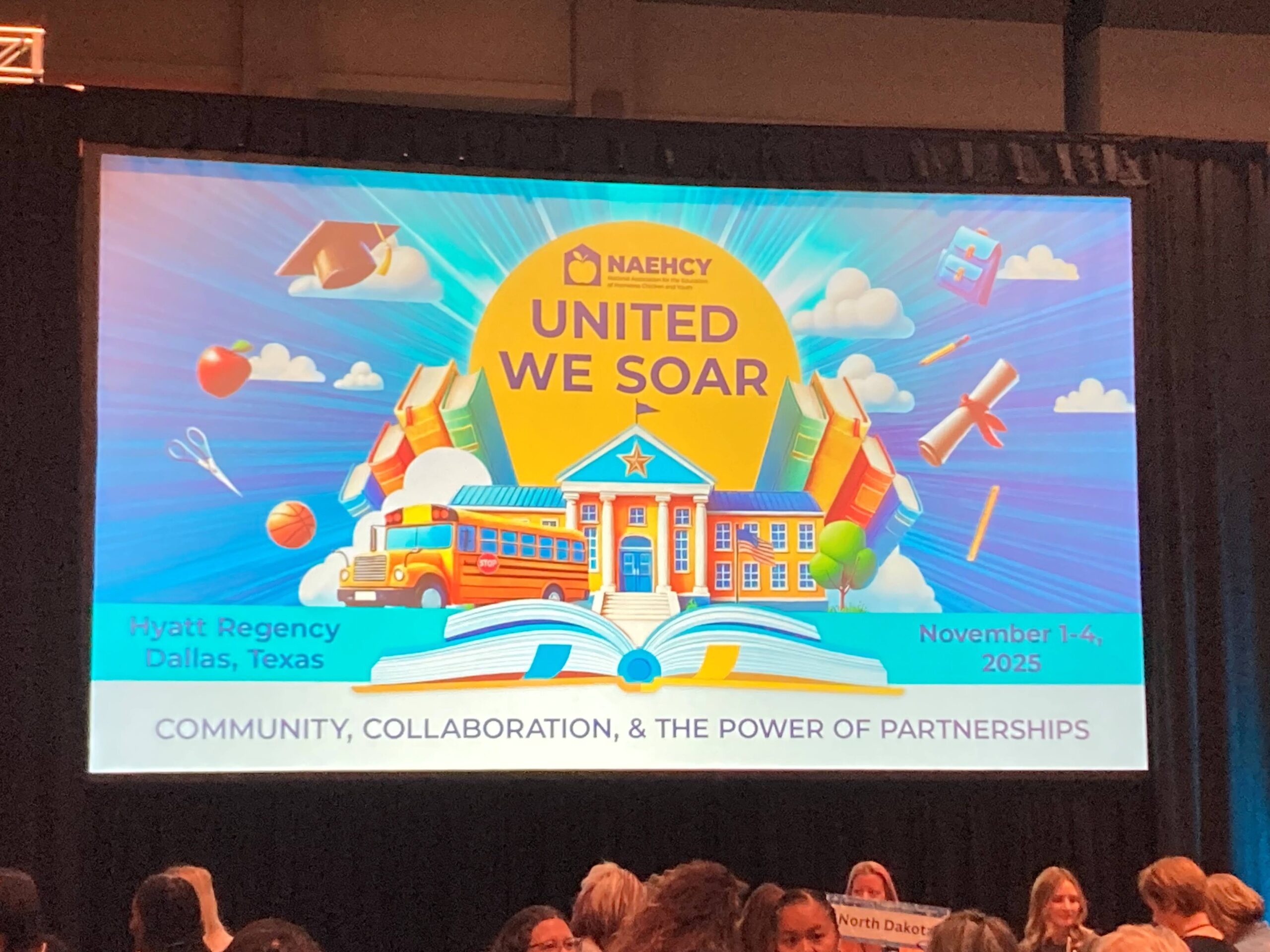
From November 2–4, I had the privilege of representing Horizons for Homeless Children at the National Association for the Education of Homeless Children and Youth (NAEHCY) Conference in Dallas, Texas. This year’s theme—United We Soar: Community, Collaboration, and the Power of Partnerships—perfectly captured the spirit of the event. Being surrounded by more than 1,800 educators, advocates, and service providers, all working toward the same goal was empowering and energizing.
Connecting With Leaders in Our Field
One of the highlights of the conference was meeting influential leaders working in this space including:
- Shirley Fan Chan, Massachusetts McKinney-Vento State Coordinator
- Barbara Duffield, Executive Director of SchoolHouse Connection and one of our key advocacy partners
- Carie Bires, Chair of NAEHCY’s Early Childhood Committee
These conversations reminded me how interconnected our work is—and how important it is for Horizons to have a seat at these national tables.
Learning From Powerful Sessions: Understanding Trauma and Supporting Healing
Over two and a half days, I attended seven breakout sessions and listened to three inspiring keynote speakers. Several sessions deeply resonated with the work we do here at Horizons.
One session, “Helping Our Most Vulnerable Children and Families to Soar to Their Greatest Heights” presented by Cheryl Fuller, focused on trauma and how it shows up for individuals experiencing homelessness. She identified four disruptions that often trigger trauma reactions:
- 1. Loss of connection
- 2. Loss of routine and structure
- 3. Loss of familiar expectations
- 4. Loss of safety and security
What struck me was that these four elements are also the foundation of healing. By rebuilding connection, routine, predictability, and safety, we help children and families recover, grow, and thrive. It reaffirmed something we know well at Horizons: healing happens through relationships.

Humanizing Our Approach
In another session, “It’s Personal: Removing Cookie Cutter Approaches and Creating Systems and Structures that Build Equity Around Homelessness,” Cassandra Willis emphasized compassion, care, and consistency. She highlighted what we see every day—every family has a story, and there is always a reason behind the “why.”
Throughout these sessions, I found myself reflecting on Horizons’ two-generational model, our individualized approach to goals, our core curriculum, and our Pathways to New Horizons program. In many ways, the national conversations affirmed what Horizons is already doing so well.
Championing Early Childhood — A Missing Piece
Out of more than 70 breakout sessions, only two focused specifically on early childhood or the prenatal-to-three population. I attended both and participated actively in the question-and-answer segment. The limited space dedicated to early childhood left an impression on me. It made me think about the responsibility we have at Horizons—not just to serve children and families in Massachusetts, but to share our expertise nationally. Horizons truly represent the best practice in early education and care for young children experiencing homelessness.
A Call to Action
The conference closed with a keynote from Heather Alden, who challenged us to continue advocating boldly and partnering deeply. Her message felt like a personal charge:
- 1. Raise your hand—your expertise matters.
- 2. Say yes to being in the room.
- 3. If not you, then who will speak for these children and families?
- 4. Break down barriers and open doors for others.
As she spoke, I found myself thinking about our partners at Horizons—from major corporate donors to individual supporters—and how essential they are to sustaining this work.
Leaving With Renewed Purpose
There is still too little guidance and too few voices advocating for the youngest children experiencing homelessness. Horizons fills that gap here in Boston—and we do it well. We are a model program. We are leading the way. And I’m proud that our work, and the work of our incredible staff and community, continues to set the standard for what’s possible.